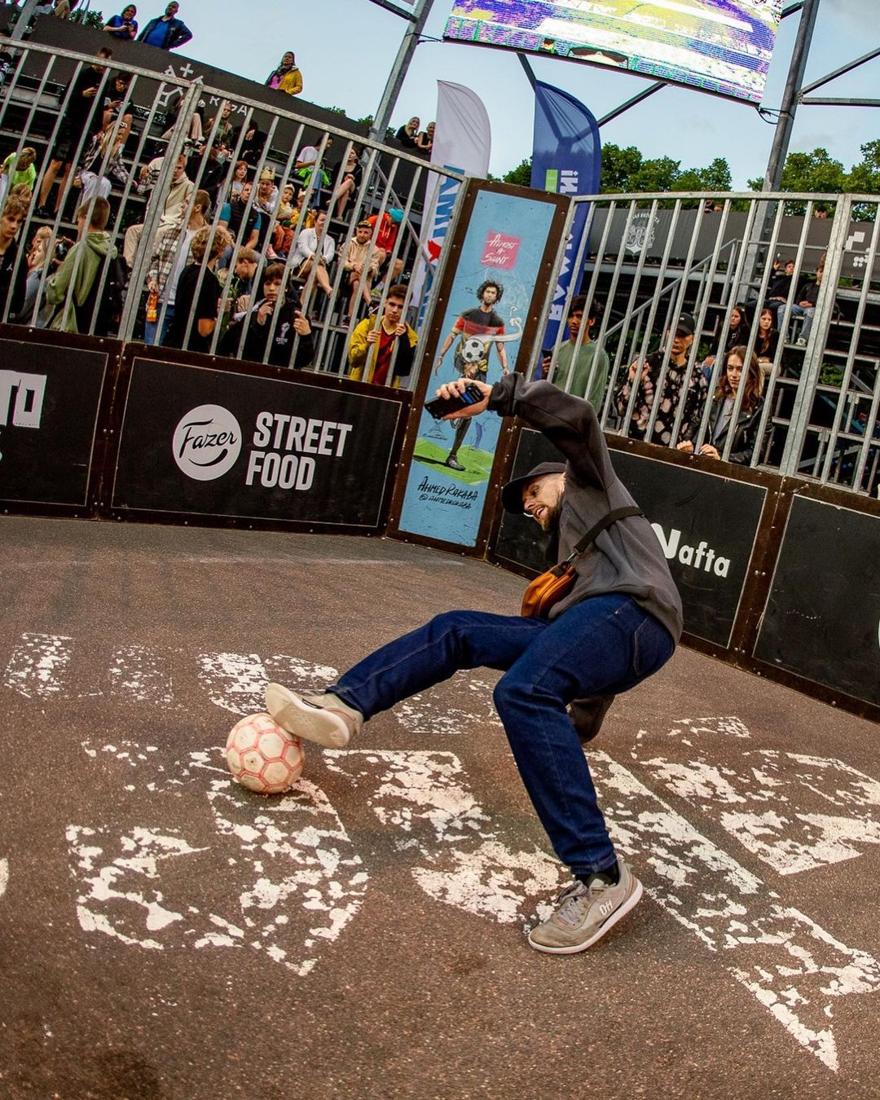
Start with touches you can connect
You don’t need a long routine to begin. Give yourself a little space and try these three starting points, slowly enough to stay in control.
Sole roll: rest the sole of one foot on the ball and roll it across your body. Stop it with the other foot, then send it back. Get comfortable with both directions before trying to make it quicker.
Pullback: place your sole on the ball and roll it back towards you. Use your next touch to take it in a new direction. Keep it close enough that you can reach that next touch without chasing it.
Inside and outside touches: use the inside of one foot to guide the ball one way, then the outside to bring it back the other way. Start with small movements and try both feet. Notice how your body has to move with the ball.
The space between moves is part of the move
Once those touches feel familiar, try a short combination: roll the ball across, stop it with the other sole, pull it back and turn into your next touch. If the connection feels awkward, slow down just that part. Where is your weight? Which foot is free? Where does the ball need to be for you to keep going?
Now change something. Hold the stop for a moment. Make the next touch quicker. Turn the other way or start on your less familiar foot. You can play with music and see how it changes your rhythm, or simply follow the feeling of the ball.
A combination doesn’t have to contain the hardest trick you know to be interesting. The way you connect familiar touches can say plenty about your style.
Make a video. Share your style.
Groundmoves also live through the videos players make and share online. A filmed combination lets someone on the other side of the world see your style, try an idea and send something back. The location, music and edit can become part of how you express yourself with the ball.
You can start simply: film a short sequence with your whole body and the ball in view. Share a combination you like, or an attempt you want feedback on. If another player inspired the move, credit them. Ask a friend to film, swap roles and make something together.
For inspiration, watch Street Soccer Chronicles, Episode 3: Nørrebronx below. It takes you into where Liicht creates his groundmoves and develops his street football style. Watch it for ideas, rather than as a routine you need to copy touch for touch.
What is Pannahouse Battlegrounds?
Pannahouse Battlegrounds is a one-on-one street football battle that combines groundmoves, dance and music. Players use the ball, their footwork and their whole body to express their style in front of an opponent and an audience. Think of a dance battle with a football: the performance and the way a player responds to the moment are at the centre.
A panna match revolves around goals and putting the ball through an opponent’s legs. Battlegrounds gives the creative performance its own stage. Groundmoves are part of that language: rolls, turns and combinations become something personal through rhythm, body movement and attitude.
That’s why it belongs in a conversation about learning groundmoves. A simple combination can become more expressive when you change its tempo, add a pause or move your body with it. You’re developing something you can share in a video, at a session or in a battle.
Pannahouse has held live Battlegrounds competitions alongside its championship events in Copenhagen, as well as an online groundmoves competition. The online format lets players share their style from different parts of the world; the live event brings that exchange face to face. Watch our Battlegrounds video below to see the atmosphere and the football-and-dance concept in action.
Find a starting point in the Academy
The entire Street Football Starter Pack is free to access in the Pannahouse Academy app. Getting Comfortable on the Ball, Pullback and Your First Combo give you a foundation for exploring these movements. Watch the part you need, take it to your ball and return when you want another look.
Try a small combination on your own, then share it with someone. Ask them to show you their version. That exchange can give you more ideas than learning another move in isolation.
Looking for people to share it with? Start on your own and find your street football community.