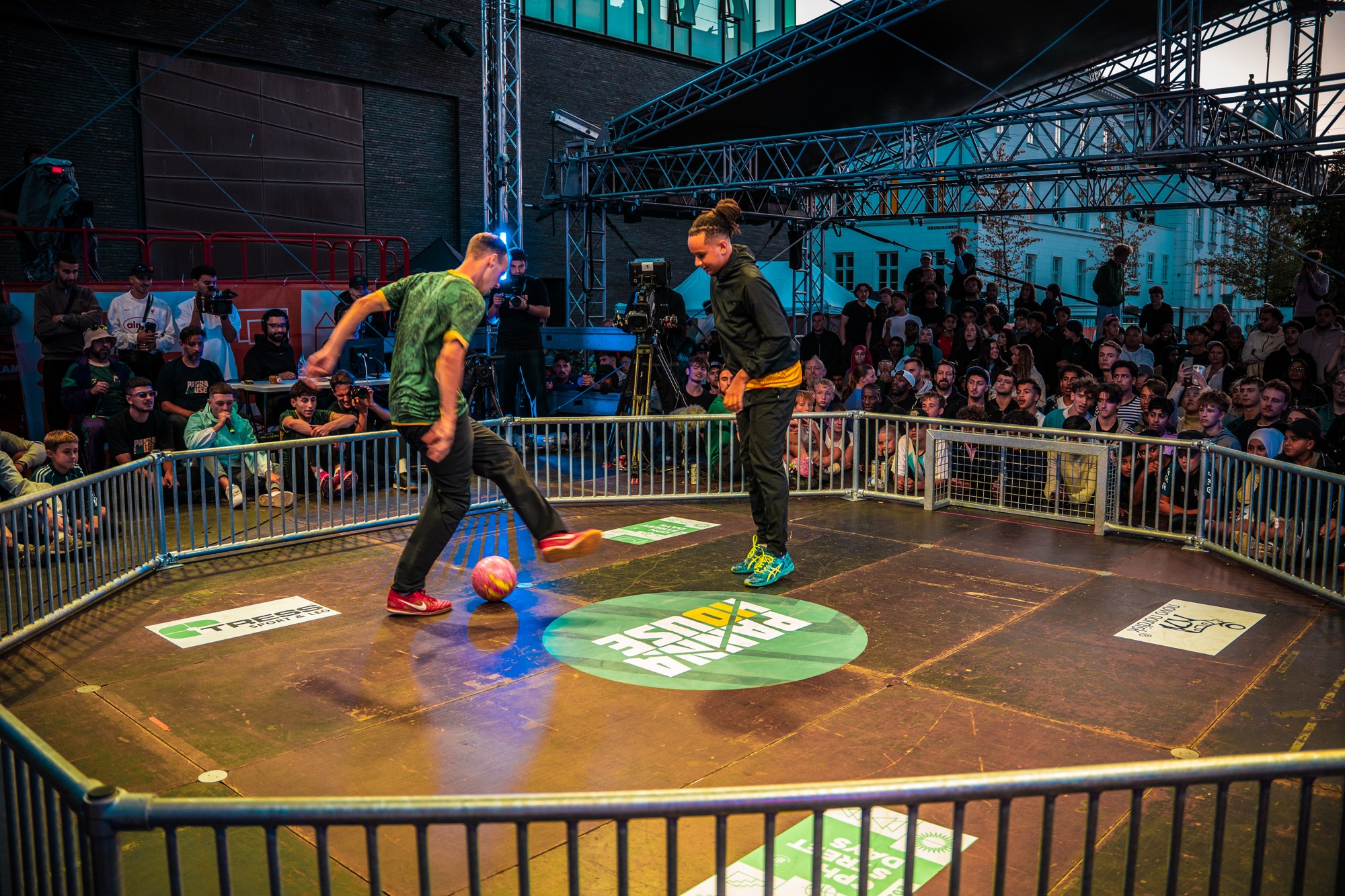
Where does the word panna come from?
Panna comes from Surinamese usage and became part of the street-football language in the Netherlands. On the court, it means putting the ball through your opponent’s legs. You might know the same move as a nutmeg, or a tunnel.
The word panna is associated with “destruction” through its Surinamese roots. On the court, that meaning comes to life when you put the ball through your opponent’s legs. In a knockout game, that one move ends the match.
From Dutch street courts to organised competitions
Panna grew in the cultural melting pot of the Netherlands’ street-football communities. Young people from different backgrounds brought their own ideas and styles to the game. For some, access to clubs, pitches or equipment was limited, so they took the football they loved into the streets. A ball, a small space and someone to challenge were enough to get a game going.
By 2001, Nike was staging a one-on-one tournament in Amsterdam under the name Panna Knockout. Organised events gave street players a stage, but they weren’t the beginning of the move itself.
Those roots matter. Panna leaves room for players to bring their own ideas to the ball, learn from one another and develop a style people recognise.
How does a panna match work?
3 minutes, 2 players, 1 ball. You try to outscore your opponent while protecting the space between your legs. In a knockout game, a valid panna wins immediately. If no panna ends the match, the player with more goals wins.
Goals give the defender another reason to move. Protect the gap between your legs all the time and you may leave a shot open. Reach to stop the shot and you may give the attacker a chance for a panna. That choice is part of the game.
WATCH THE GAME
Noah Kofi vs Jacob Corneliusen
Panna World Championships 2025 · Semifinal
How do panna competitions work?
One-on-one battles are at the heart of panna competition. In a group stage, you play several opponents and results decide who goes through. In a knockout bracket, winning takes you into the next round, all the way to the final. That tournament structure is separate from the knockout moment when a panna ends an individual match.
Competitions can give you a chance to meet players beyond your usual circle. At the Panna World Championships in Copenhagen, that meeting becomes international: players bring different styles, challenge one another and spend time around the same game. Watching a full match is a good way to see how goals, patience and the threat of a panna fit together.
Why do people get into panna?
There’s room to develop a style that looks like you. You might enjoy a patient setup, a quick change of direction or a trick that gets your opponent to take one step too many. The other player can see the ball the whole time, which makes the challenge fun.
At Pannahouse, the game also gives people a way into a community. You can watch, have a go, learn from another player and come back for the next session. Players who started out learning can become the people helping someone else take their first touch.
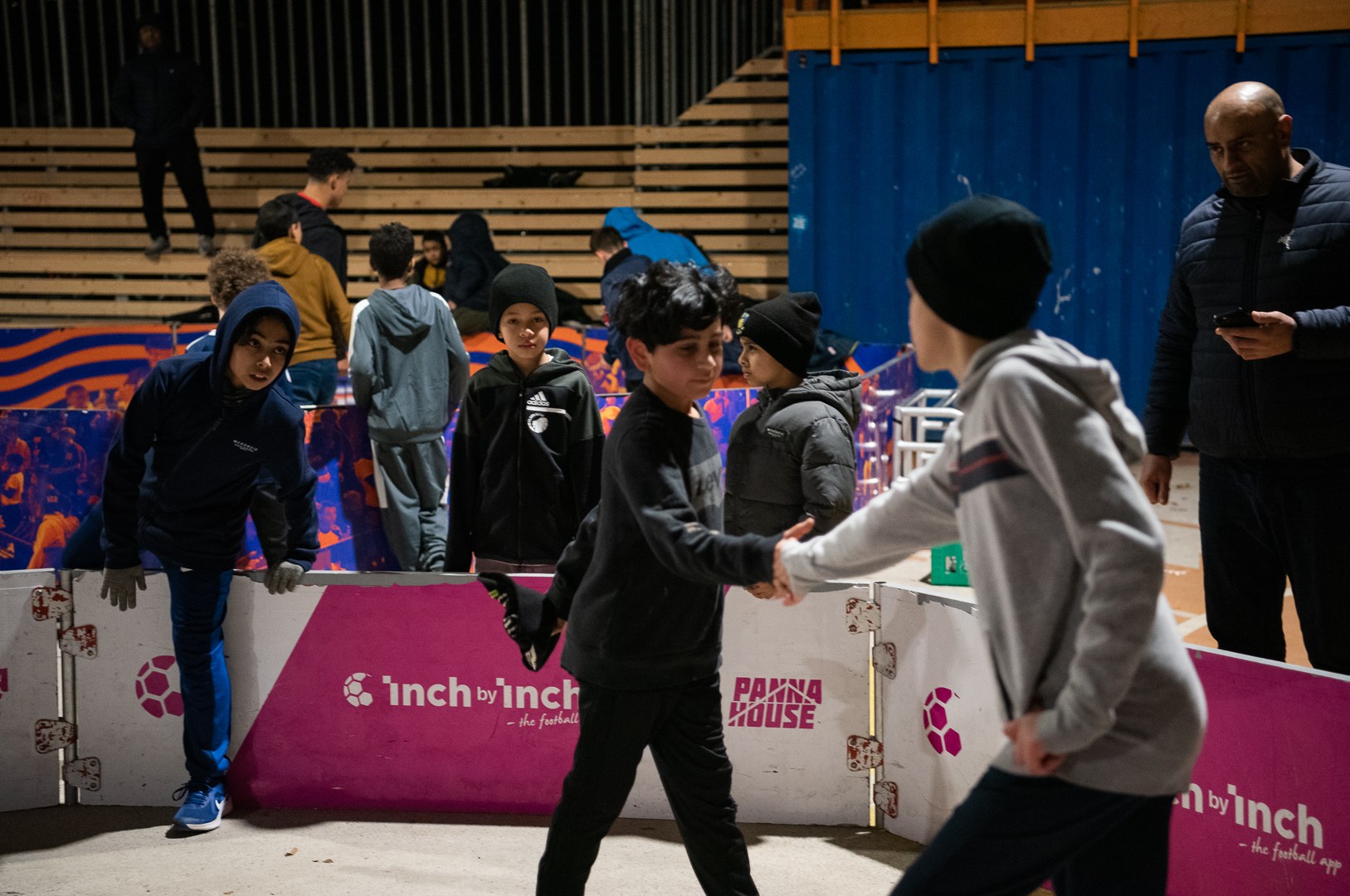
What do you need to try it?
All you need to start is a ball. Move with it, try things and find your own way of expressing yourself. You can explore touches and movements on your own. Bring in a partner when you want to test them against someone and play the game.
If you want somewhere to start, the beginner practice guide takes you through close control and a simple setup you can repeat.
How do you find other panna players?
Try searching for “panna” or “street football” with the name of your city. On Instagram, look at the places tagged in training clips and the people playing there. A local crew’s recent posts can lead you to a court, an open session or someone to ask about joining in.
You can also ask at a nearby football or futsal club, youth centre or public court. A simple message works: “I’m starting to learn panna. Does anyone train nearby, and can beginners join?” If there isn’t a session yet, invite a friend and start with one ball.
Online, follow players whose style you enjoy and watch their longer videos as well as highlights. Ask a specific question about a move or share a practice clip when feedback is welcome. Pannahouse Academy is another place to work on your skills between games.
If you’re in Copenhagen, our open Pannahouse training sessions are a place to start. You can turn up to learn, meet other players and find your feet in the community.
Keep learning with Pannahouse
If you want to explore a move in more detail, Pannahouse Academy brings together video lessons on panna, skills and combinations. Watch a lesson, take it to the ball and see how you can make it part of your own game.
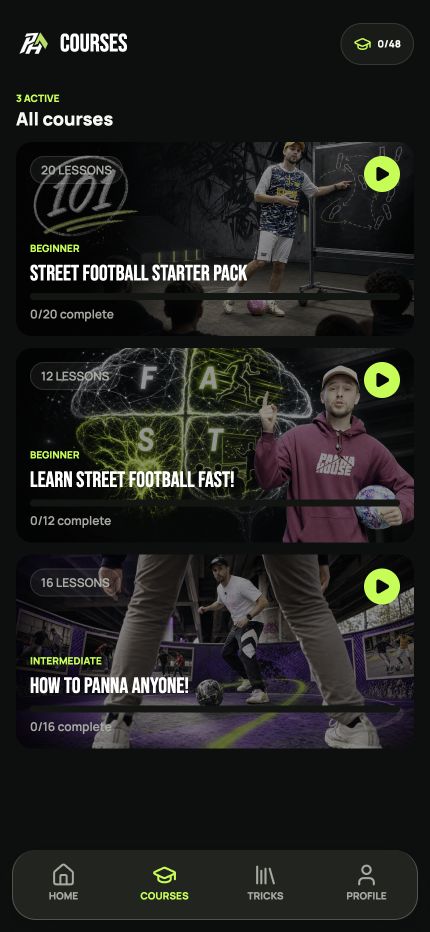
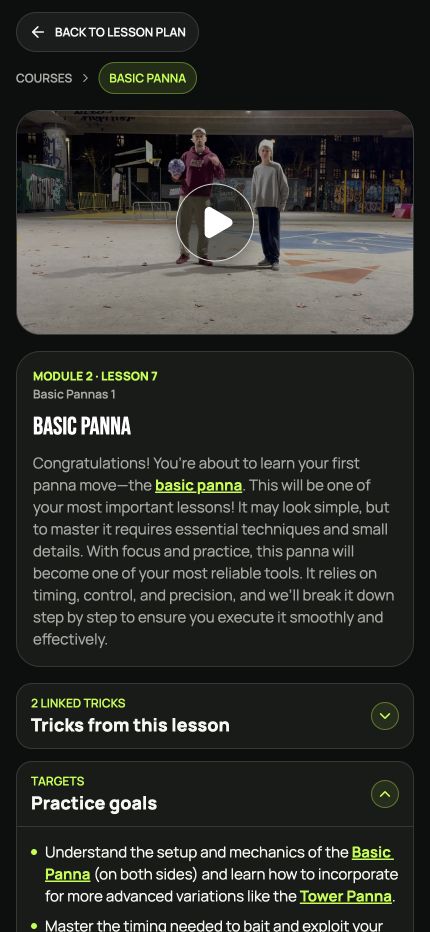
For a first practice session, start with our beginner practice guide.