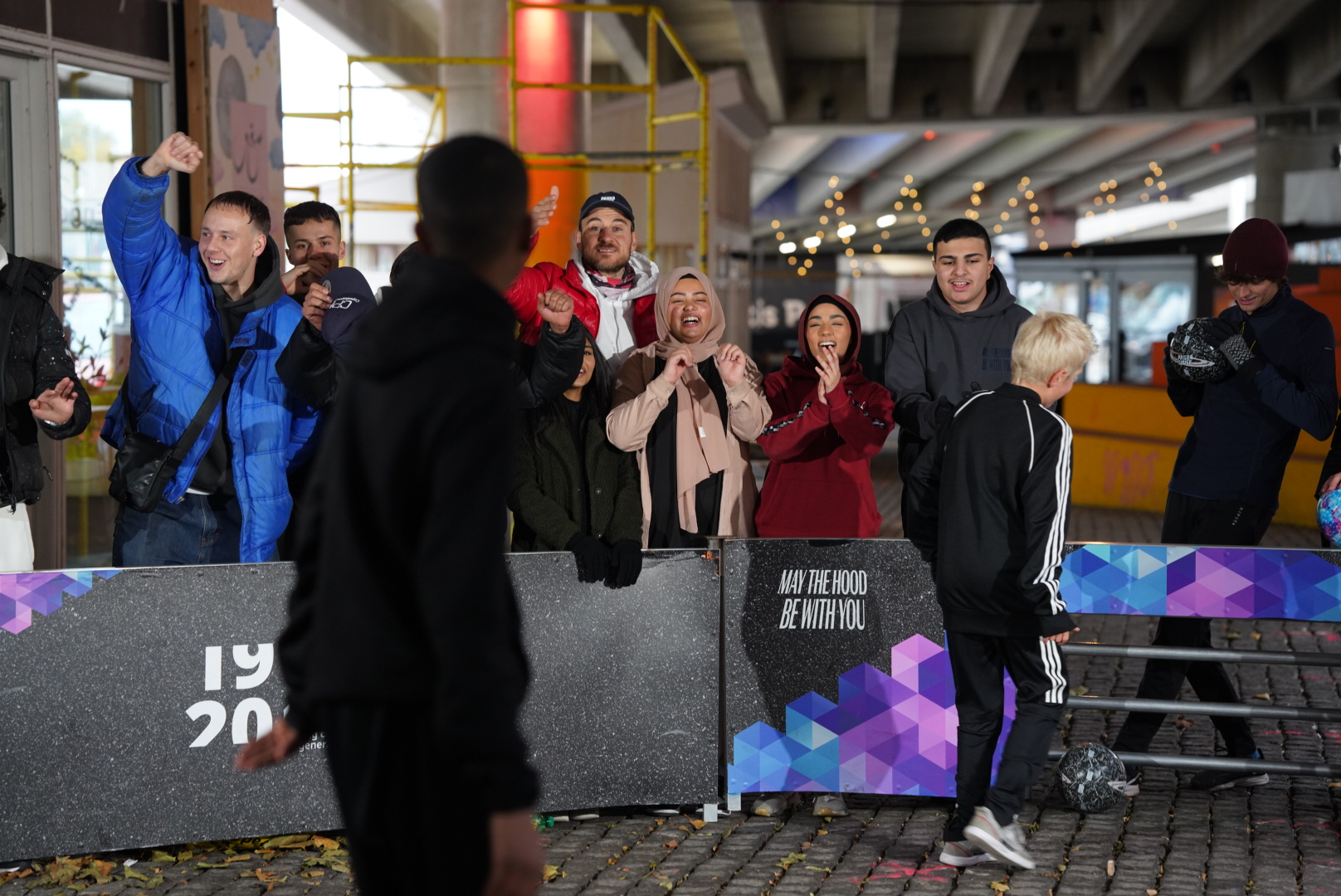
Before the opponent, get to know the ball
You can begin on your own. Put a foot on the ball, roll it across your body and bring it back. Change feet. Try turning with it. There’s no routine to get right yet; give yourself room to find movements you enjoy.
As you experiment, notice how far the ball travels. Can you bring it back without chasing it? Can you stop halfway through a move? That control becomes useful later, when an opponent does something you didn’t expect. You can change your mind and keep playing.
A defender changes the story
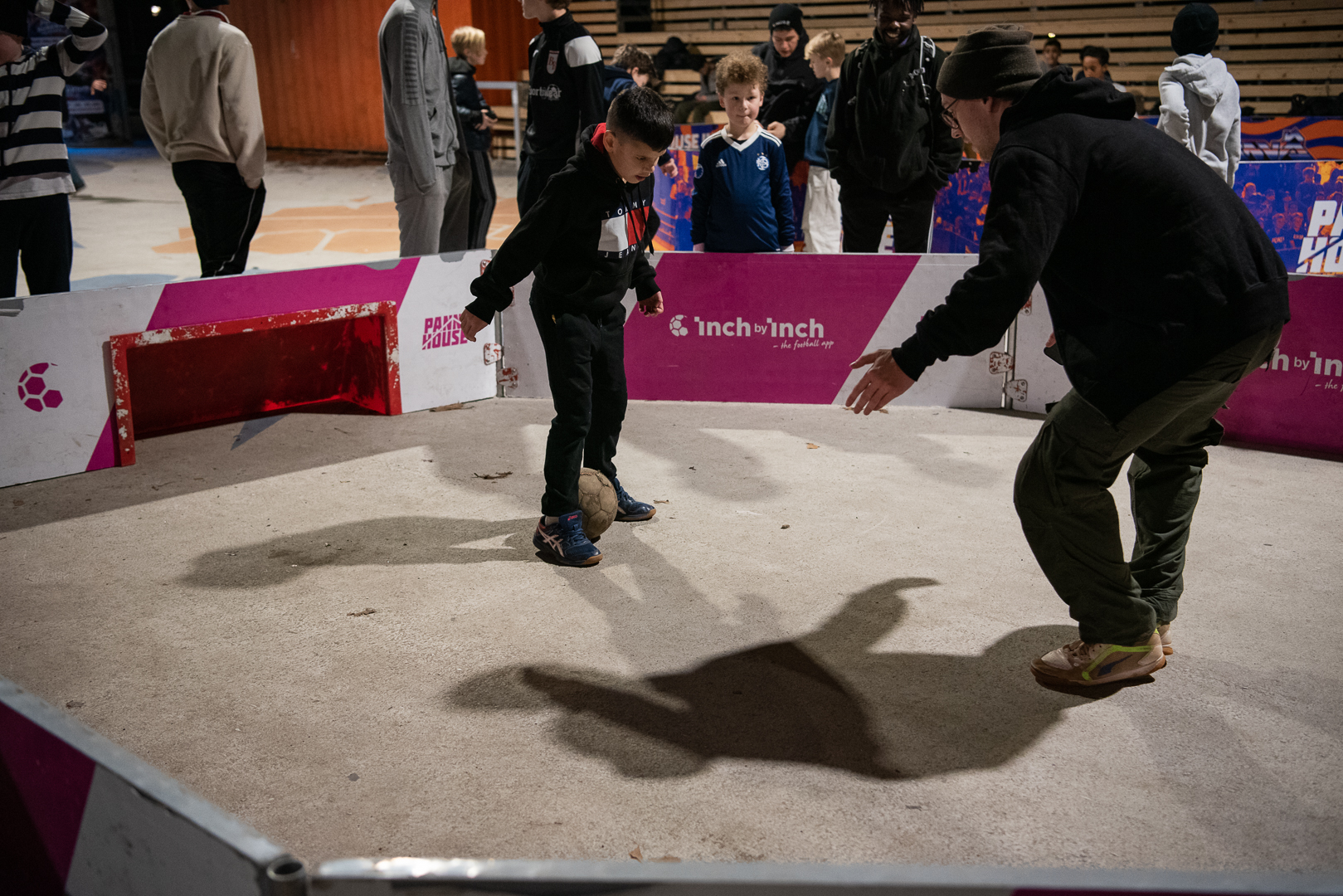
Bring in a friend and those familiar touches become a conversation. Move the ball closer and they might reach for it. Pull it back and they might follow. Or they might wait, leaving you to come up with another idea.
Try this with light pressure: let the ball look close enough to take, while keeping it within reach of your own foot. Watch the defender’s step. If it opens a gap between their legs, use a controlled touch to send the ball through. If it doesn’t, bring the ball back and try a different distance or pace.
This is one way to create a panna, the move also known as a nutmeg. The opening comes from getting the other player to react. Swap roles and you’ll start to feel which movements tempt you to reach, too.
Give yourself another go
If your friend keeps taking the ball, make your first touch smaller. If they never move, try offering it a little closer. When you spot a gap but miss it, slow things down and practise the direction of the final touch.
Then leave the exercise behind for a few friendly games. Try a movement you’ve seen another player use. Ask them how they set it up. Change something and see what happens. You’re building a feel for the person in front of you, as well as the ball at your feet.
Your first panna might come from a simple touch. Afterwards, think back to the moment just before it: what made your opponent move? That gives you something to explore the next time you pick up the ball.
Keep exploring with Pannahouse Academy
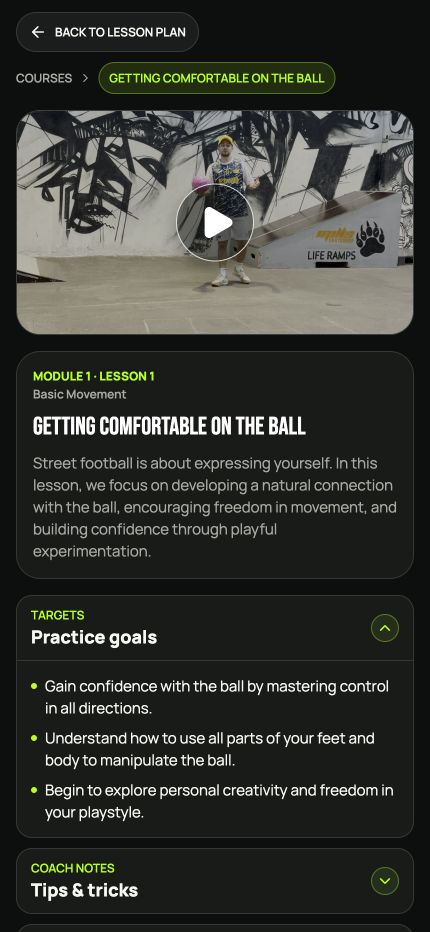
If you’d like to see the movements before trying them, the entire Street Football Starter Pack is free to access in the Pannahouse Academy app. Getting comfortable on the ball is a place to begin, with a video lesson and ideas for finding your own way to move.
Watch, take an idea to the ball and come back when you’re curious about the next step. There’s plenty to discover before you ever put it through someone’s legs.
Create a free account to start learning.