Based on the Pannahouse Invitationals 2022 rulebook.
3 minutes, 2 players, 1 ball
A match lasts three minutes. You win by scoring more goals than your opponent, or by giving an intentional panna at any point during the game. A valid panna ends the match immediately, regardless of the score.
One referee and one assistant or table official oversee the game. The referee has the final say on decisions.
How a match starts
The players stand back-to-back in the middle of the court, with the ball between them. On the official’s signal, they turn and compete for possession.
Once possession is settled, the players show respect with a handshake, a fist bump or something similar, and the match clock starts. A false start costs the offending player possession.

What counts as a panna?
You must have possession of the ball and intentionally play it through your opponent’s legs. You do not need to collect it on the other side. Once the referee awards the panna, the match is over.
A rebound off the boarding directly through someone’s legs does not count. Neither does poking the ball through after it has been caught and locked between the opponent’s legs.
A shot that happens to go through the legs is not automatically a panna. It can count if playing through the legs was intentional, including an intentional shot through them. The referee judges that intention.
How goals and restarts work
For a goal to count, the ball must go directly into the goal without hitting the boarding on the way. Own goals are allowed.
After scoring, give your opponent at least one metre of space to restart, unless they begin their attack immediately. The officials can pause the game when needed.
What happens if the score is level?
Ordinary group-stage matches can end in a draw. When a knockout match needs a winner, the game goes into one minute of extra time. The player who had the last possession starts with the ball.
During extra time, a two-goal lead wins the match immediately. Otherwise, the player ahead when the minute ends wins. A panna can still finish the game.
If the score is still level, the players start back-to-back again for golden goal. The next goal wins, and a panna remains a winning finish.
Contact, fouls and keeping the game open
Panna allows limited physical contact. Pushing or using force that disrupts the technical game is not allowed. Using your hands or diving is a fault, and contact with the boarding should be kept to a minimum.
The rules distinguish a foul from a fault. A foul stops play and the clock while the players reset. A fault is a more serious offence that the officials count: after two faults, each further fault gives the opponent a goal. If an offence prevents a goal that would have been scored, the referee can also award that goal.
You cannot simply run down the clock by shutting the game down. Persistently turning your back or keeping the ball away without trying to score or deceive your opponent can be called timidity. After the referee’s warning, you have three seconds to respond. If you do not, you receive a fault and lose possession.
Respect is part of the rules. Abuse, trying to influence the referee or disrespecting an opponent can bring sanctions; disrespect can lead to disqualification. Thanking your opponent after the game matters too.
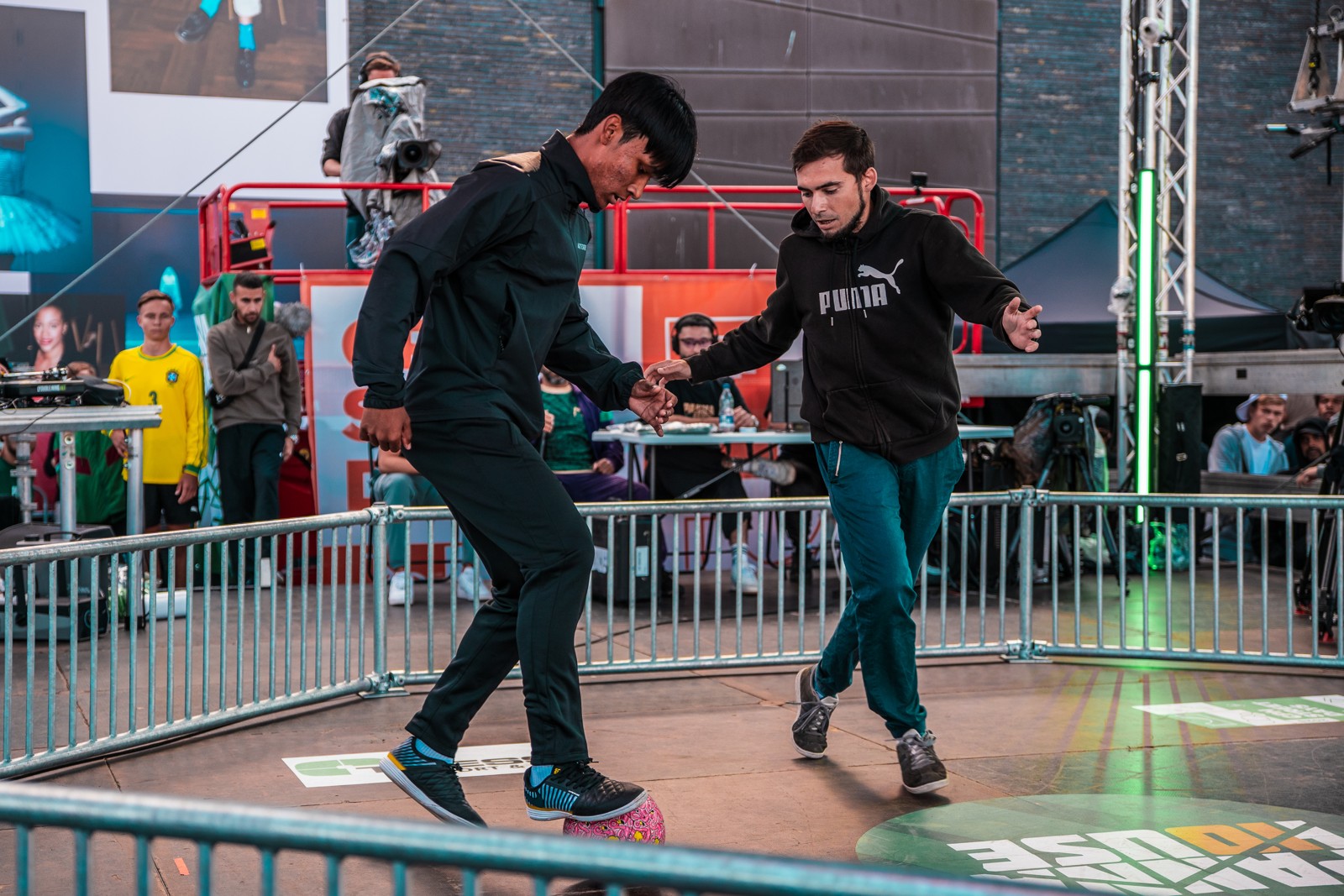
How group-stage points work
A win earns three points, a draw one and a loss zero. A panna win is recorded as 99–0, but still earns three points. The 99–0 is a recording convention, not 99 goals scored in play.
If players finish level on points, the tie-breakers are applied in this order: head-to-head results, pannas given and received, goal difference from matches without pannas, then goals scored in matches without pannas.
If a player cannot be found, the referee can award a 5–0 forfeit. If someone withdraws injured during a match, the opponent can choose a 5–0 win or keep the existing score.
Take the rules into a game
Once you know the basics, the decisions on court become easier to follow. You can attack the goal, invite a tackle or look for the panna, while your opponent has to defend against all of them.
If you want to start playing, our beginner guide helps you build your first touches and find your way into panna. For more of the competition’s story, explore the history of the Panna World Championships.